Why Financing Can Make Real Estate Attractive
How the leverage effect works with financed real estate and why return on equity can significantly exceed that of stock investments – explained clearly and concisely.
Stocks are considered one of the strongest long-term investment options. Historically, average annual returns of around 7–8% are often assumed. For example, investing €10,000 at an 8% return would generate roughly €800 profit in the first year.
With rental properties, the return on your own invested capital can be significantly higher. This is mainly because real estate is often purchased using bank financing. As a result, a relatively small amount of personal capital can be used to control a much larger asset.
A simplified example:
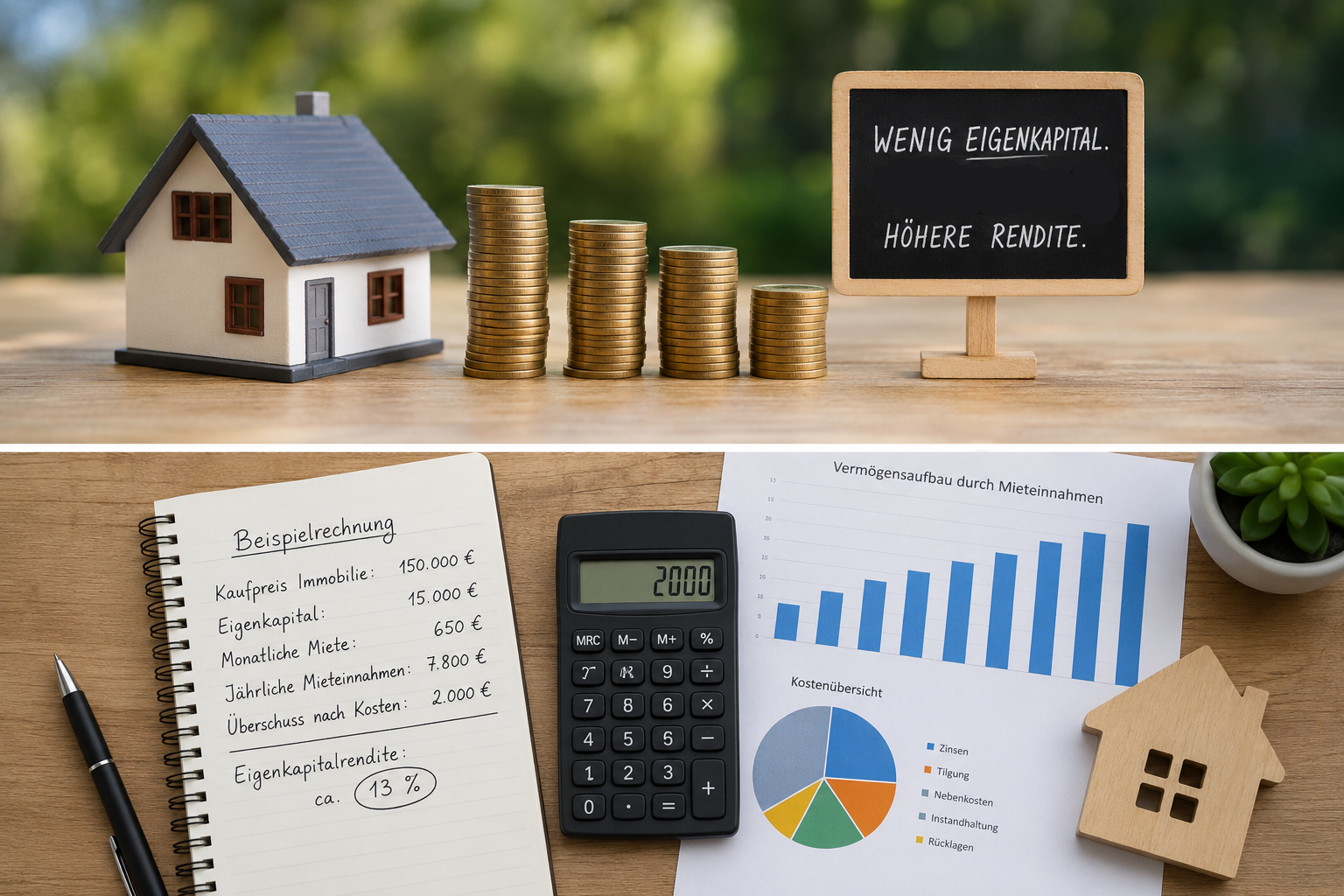
An investor uses €15,000 of personal capital to purchase a small apartment worth €150,000. The remaining amount is financed through a bank loan. The apartment generates €650 in monthly rent, or €7,800 per year.
After deducting interest, ongoing expenses, reserves, and other costs, approximately €2,000 per year remain.
This money contributes to building wealth, for example through loan repayment.
Even though only €15,000 of personal capital was invested, the yearly increase in equity is about €2,000. This equals a return on equity of roughly 13%.
This effect exists because the return is generated by the value of the entire property, while only part of the purchase price comes from personal capital. This is commonly referred to as the leverage effect.
However, leverage also increases risks. Vacancy periods, repairs, or rising financing costs can reduce returns considerably. Careful planning and sufficient financial reserves are therefore essential.
With rental properties, the return on your own invested capital can be significantly higher. This is mainly because real estate is often purchased using bank financing. As a result, a relatively small amount of personal capital can be used to control a much larger asset.
A simplified example:
An investor uses €15,000 of personal capital to purchase a small apartment worth €150,000. The remaining amount is financed through a bank loan. The apartment generates €650 in monthly rent, or €7,800 per year.
After deducting interest, ongoing expenses, reserves, and other costs, approximately €2,000 per year remain.
This money contributes to building wealth, for example through loan repayment.
Even though only €15,000 of personal capital was invested, the yearly increase in equity is about €2,000. This equals a return on equity of roughly 13%.
This effect exists because the return is generated by the value of the entire property, while only part of the purchase price comes from personal capital. This is commonly referred to as the leverage effect.
However, leverage also increases risks. Vacancy periods, repairs, or rising financing costs can reduce returns considerably. Careful planning and sufficient financial reserves are therefore essential.